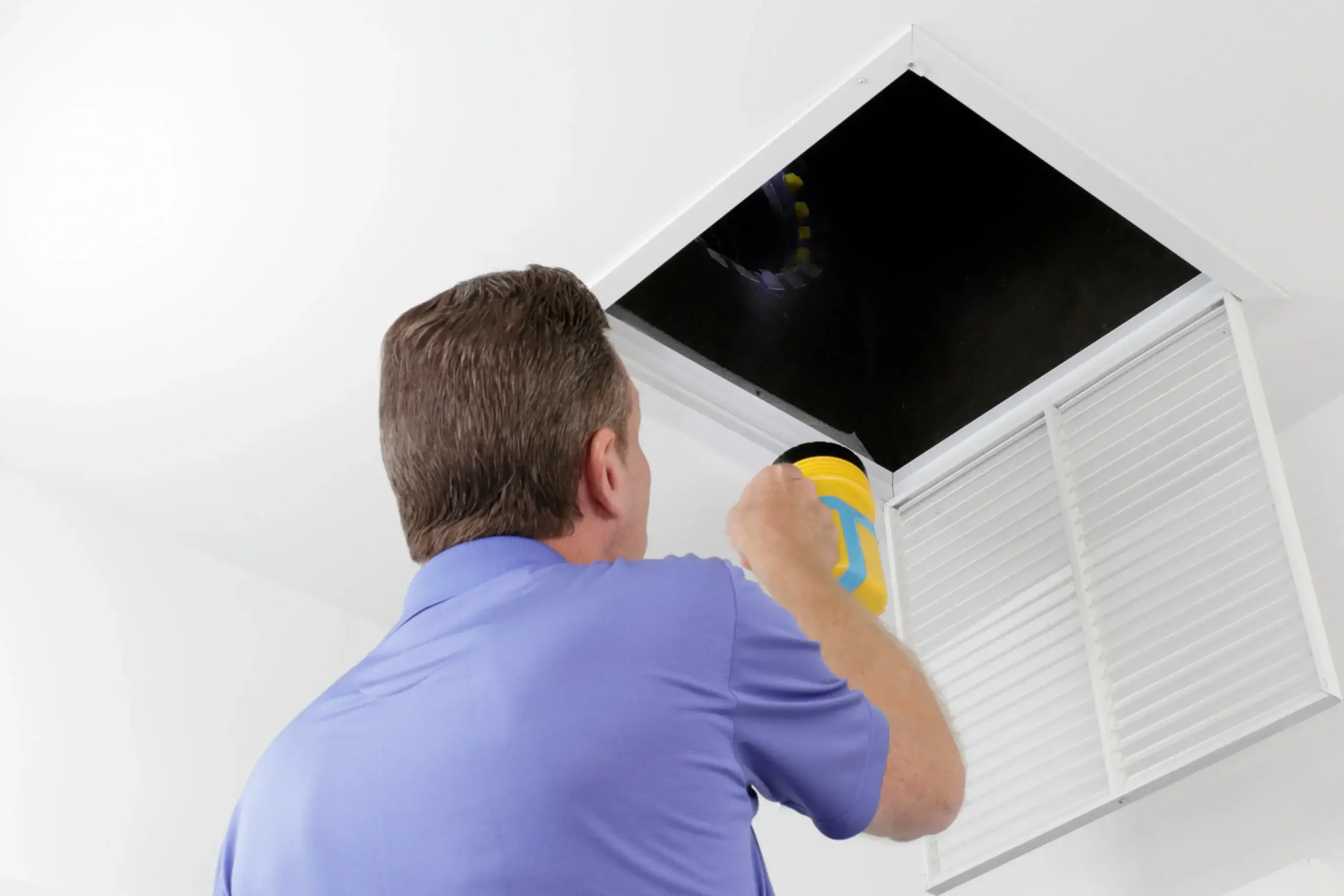
Florida’s heat and humidity create ideal conditions for mold growth, especially inside HVAC systems that run much of the year. When moisture builds up in ductwork, mold can begin forming in areas you may never see. Over time, those spores can circulate through your home every time your air conditioner runs. If you’re wondering what mold in air ducts looks like, whether it’s dangerous, and what to do next, understanding the warning signs and causes is the first step toward protecting your indoor air quality.
What Does Mold in Air Ducts Look Like?
Mold in air ducts can appear in several ways depending on the type of mold and the conditions inside the system. Some homeowners notice dark spots around air vents, while others see fuzzy or powdery growth inside ducts or on vent covers. Black mold in air vents often appears as dark green or black spotting, while white mold in air ducts may look chalky or cotton-like.
Not everything that looks like mold actually is. Dust buildup can stick to condensation and resemble mold growth. One of the most common signs of mold in air ducts is a persistent musty smell when the HVAC system runs. If you remove a vent cover and see discoloration with a damp odor, mold may be present deeper inside the ductwork.
Because mold often forms in hidden areas, a professional inspection may be needed to confirm the issue.
What Causes Mold in Air Ducts?
Mold grows when moisture and organic material combine in warm environments. HVAC systems can sometimes provide those conditions.
Several factors can contribute to mold in air ducts, including:
- High indoor humidity
- Condensation on metal ducts
- Poorly insulated ductwork
- Clogged air filters
- Dirty evaporator coils
- Long AC run cycles in humid weather
Florida homes are especially vulnerable because cooling systems run for long periods while removing humidity from the air. When moisture collects inside ducts or near vents, mold can begin to grow.
Routine HVAC care helps reduce these risks. Regular inspections and cleaning through professional air conditioning maintenance services can catch small moisture issues before they become bigger problems.
Is Mold in Air Ducts Dangerous?
Not all mold is toxic, but mold inside ductwork can still affect indoor air quality.
When mold grows in ducts, spores may circulate through the home each time the system runs. This can trigger allergy symptoms like sneezing, coughing, headaches, or irritated eyes. People with asthma or respiratory issues may notice stronger reactions.
Concerns about toxic black mold in air vents are common, but many household mold issues involve less harmful types. Even so, mold in vents should be addressed before it spreads through the HVAC system. If you notice musty odors, visible growth around vents, or unexplained allergy symptoms, it may be time to have your system evaluated.
How to Get Rid of Mold in Air Ducts
When homeowners find mold, the first instinct is often to spray something into the ducts. Unfortunately, this can sometimes create more problems than it solves.
Can You Spray Something in the Ducts?
Many DIY solutions claim to eliminate mold in air ducts, but spraying chemicals without addressing the cause is rarely effective. Some products can even damage duct materials or circulate harsh chemicals through your home’s air.
When Duct Cleaning Is Enough
If mold growth is limited to surfaces, air duct mold cleaning may solve the problem. HVAC technicians can remove buildup, sanitize affected areas, and address moisture issues causing the growth.
When Duct Replacement Is Necessary
In more serious cases, air duct mold removal may require replacing sections of ductwork. This is more likely if:
- Mold has spread into duct insulation
- Flexible ducts are contaminated
- Metal ducts show rust or condensation damage
- Mold is widespread throughout the system
When duct materials are compromised, replacement may be the best long-term solution.
Should You Replace Your Ductwork If There’s Mold?
Homeowners often hear mixed advice online about replacing ductwork after mold appears. The answer depends on the situation.
Sometimes, cleaning and correcting moisture problems is enough. In other cases, replacement may be recommended based on duct material and the extent of contamination. Metal ducts with surface mold can often be cleaned successfully. Flexible ducts or fiber-lined systems may need replacement because mold can embed in the material.
An inspection can determine whether cleaning, repair, or new duct installation is the best option. Properly designed duct systems also improve airflow, which is why professional air duct installation is important for long-term HVAC performance.
How to Prevent Mold in Air Ducts in Florida
Preventing mold in air ducts mostly comes down to controlling moisture and maintaining your HVAC system.
A few steps can reduce the risk:
- Keep ducts insulated
- Replace air filters regularly
- Maintain balanced indoor humidity
- Ensure ducts are properly sealed
- Schedule routine HVAC inspections
Regular maintenance also plays a major role in prevention. Cleaning coils, checking drain lines, and maintaining airflow help your system remove moisture effectively.
Many homeowners reduce future problems with a professional HVAC maintenance plan, which helps identify small issues before they affect indoor air quality.
When to Call a Professional
If you notice musty odors when your system runs or discoloration around vents, it may be time to have your HVAC system evaluated.
Mold problems usually start with excess moisture somewhere in the system. A professional inspection can determine whether mold is present, identify the cause, and recommend the right solution.
If you suspect mold may be forming in your ductwork, you can request a quote to have your system inspected and get guidance on the next steps.